Author Archives: Boyles Irish Pantry

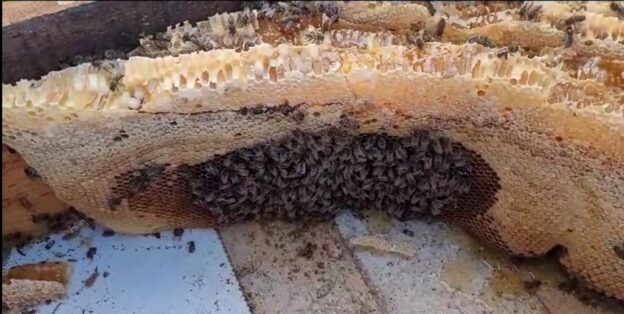
Dunleer honey bee removal

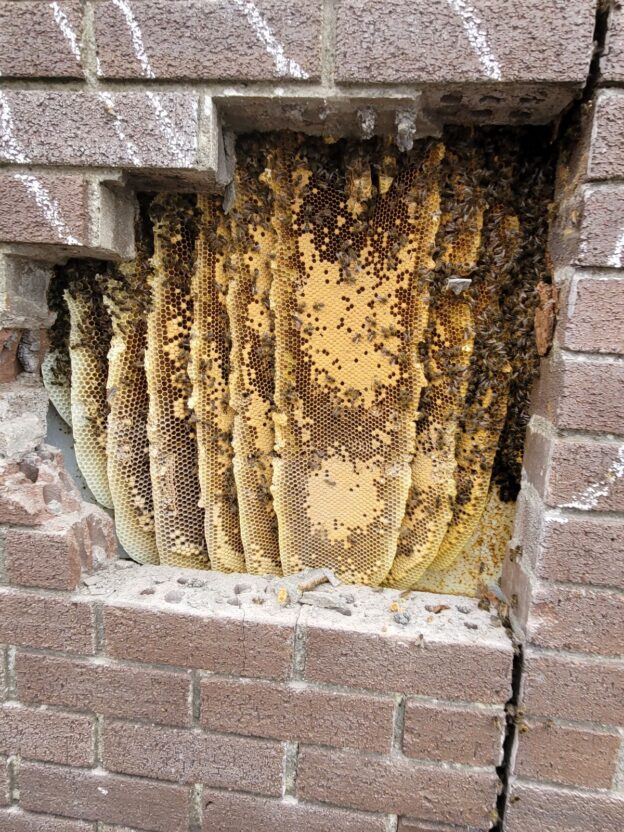
Honey Bee Removal Dunleer

Dunleer Honey Bee Removal

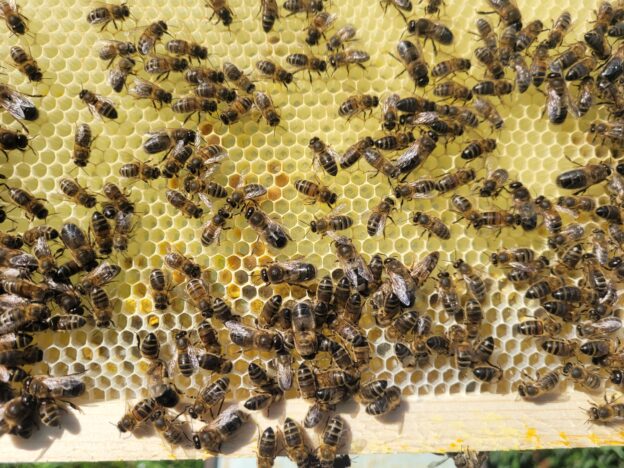
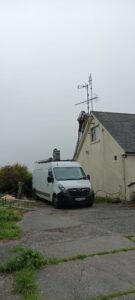
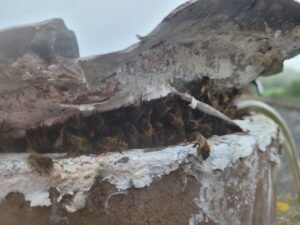
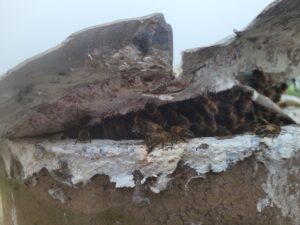
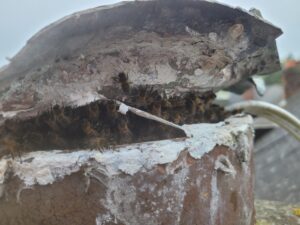
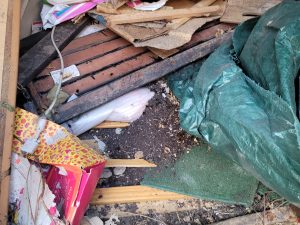
We were contacted by Eddie who lives in Dunleer, Co Louth on the 20th Nov 2023 in relation to a honey bee removal. He explained that his flat roof extension at the back of his property was being reroofed and it was discovered a colony of honey bees had set up home there. With the banging and hammering the bees were getting agitated and trying to attack the roofing contractor. We wouldn’t ordinarily perform a removal this late in the year but in this situation, there was no choice. The roof needed the repairs immediately.


Locating the colony

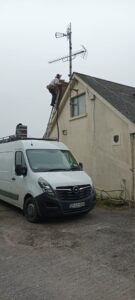
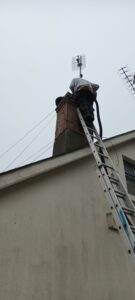
On Sat the 25th we called out. That morning was very cold and there had been a strong frost overnight so we decided to leave the removal until that Monday when temperatures where forecast to be over 8 degrees. We did do a bit of recognisance with our thermal imager to try and judge the scale of the colony. The heat signature showed it was fairly sizable. The roof itself is a single-story flat roof, so access would be gained using a step ladder.

Assessing and the Removal

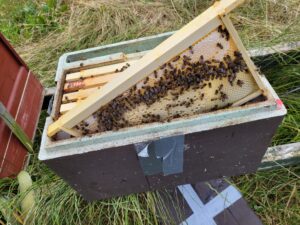
To attempt a removal like this we needed to take a few extra things into consideration. Temperature was going to be a big issue. Pushing the removal back a few days did help with that but we would still need to be very prepared and work fast. The roof being repaired wasn’t going to be a problem so we were allowed to open as much as we needed in one go. Food would be the next issue. The vac box set up would need plenty of honey stores already in it before we started and luckily, we still had some frames not extracted at the time.

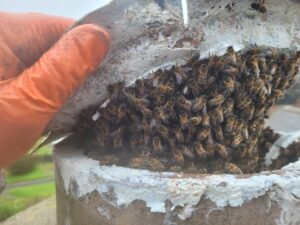
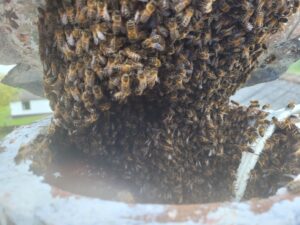
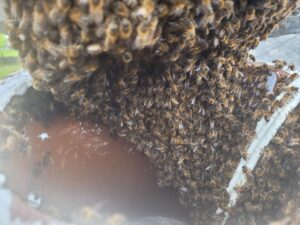
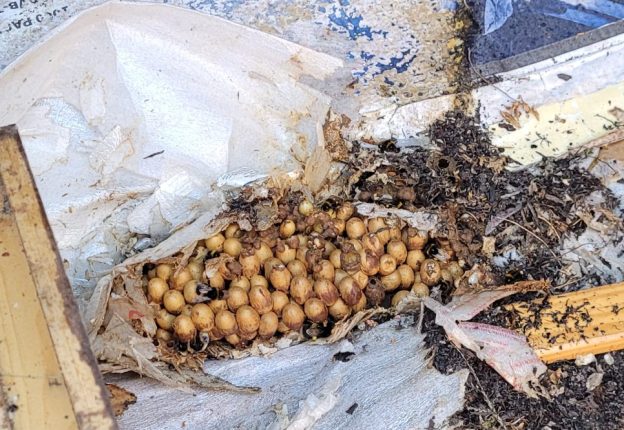
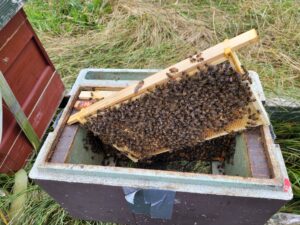
We started from the corner of the roof working back towards the heat source. Once opened up we worked gently and as quickly as we could. Taking each comb away slowly and removing the bees. We allowed the remaining bees to cluster on to the next comb. One by one we worked to the far side of the colony and quickly removed the last of the bees.

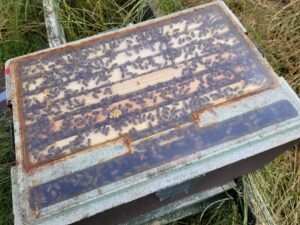
With the bees safely in the box we closed it up, opened the air vents and covered it with a jacket in the back of the van to keep warm.

Clean up and finishing

Back on the roof we started disconnecting our equipment and cleaning up. Within a half an hour of putting the bees in the van there was a huge temperature drop. I was thankful the job went as smoothly as it did. Honey bees freeze to death at +7 degrees and while they weren’t happy with us removing them at around 9 degrees they would have been fighting to the death if we took much longer.

Through the inspection lid we could see and hear how active the bees were in their new home. To give them the best chance of survival we kept the box in our house for 2 days before re-locating them to one of our apiaries.

In Closing

Big thanks to Eddie. It still remains to be seen whether they will survive the winter months but this colony has been given the best possible chance by him contacting us.


To see more like this visit our news page News
Honey Bee Removal Black Rock

Honey Bee Removal Blackrock

Contact

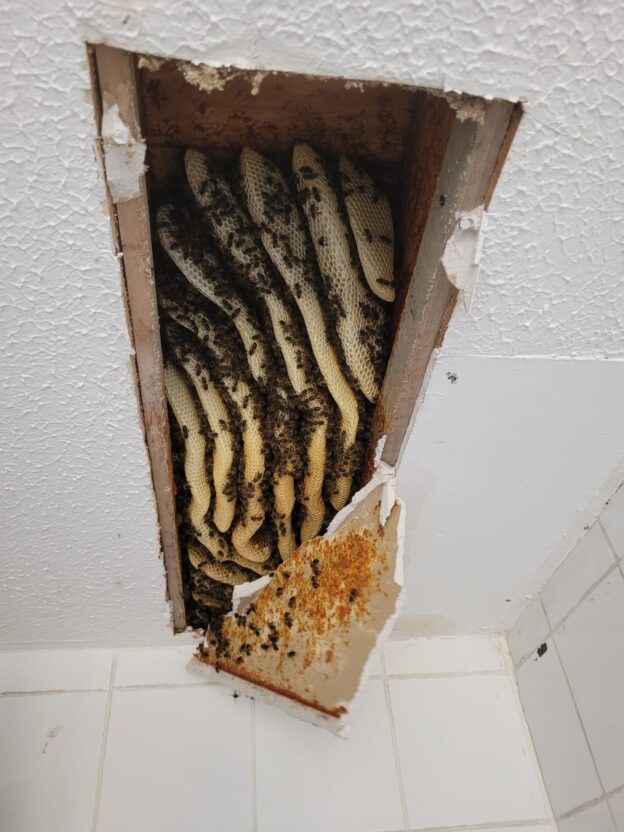
In June of this year (2023) we were contacted by Martin O Rourke from the Louth bee keeper’s association about a honey bee removal in Blackrock, Co Louth. After getting in touch with the home owner Geraldine, we got a brief history of the colony. The bees had moved in two years previous and since then had swarmed serval times. She had contacted serval bee keepers during this time but they had still not been successfully removed.
 

Locating colony and gauging size

I visited the house and removed a few roof tiles to get a scope of the size of the colony. Straight away I could tell it was immense. I outlined what we would need to do and that she would have to get a roofer to repair the felt after the removal was complete and the straggling bees had dissipated. At that time of the year, it wasn’t great weather to open up the roof so we had to wait a few weeks for the weather to pick up before we could plan it in.


Removal

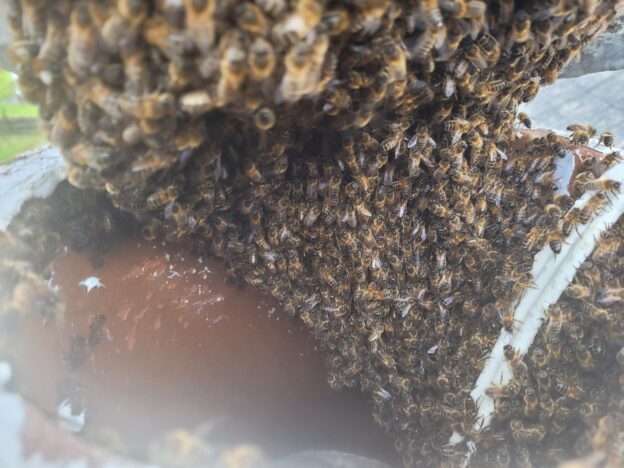
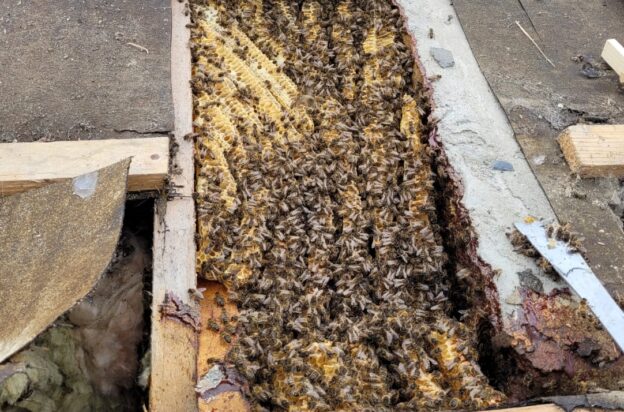
On the 30th of June we arrived to do the removal. We could gain access to the colony using a ladder and removing the roof tiles. To start, we needed to find the back of the comb they built. As you can see from the pictures, we ended up seven tiles back which was around 6ft into the roof. The bees had started building from the front and because of the steep pitch of the roof the comb at the back was at least 5ft deep. As always, we slowly started removing the brood comb first, trying not to touch the comb with honey stores. For our vac box we used brood comb with eggs and larvae from the colony to make up frames. These frame together with drawn frames and stores made up their new home.

With the vac box built we set about sucking up the bees and removing the comb piece by piece. It was a long slow process but we were able to remove everything and pull the majority of the bees into their new ready-built home. The removal took most of the day. We removed many buckets of comb and honey from the roof space. Established colonies of this size can be particularly aggressive when being removed and this was no exception.


Temporary Fix

Because of the amount of time this colony had occupied the house, it would have been impossible to mask or remove every trace of them. The timbers and the concrete blocks had been completely covered and impregnated with wax and propolis. To prevent another swarm, passing the area, from choosing this spot as their new home, we filled the whole space with expanding foam. After the space was filled, we put the tiles back on temporarily. A professional roofer was needed to remove the tiles again and repair the felt to make the roof fully water tight once the straggling bees had dissipated.


Update

Since the removal, Geraldine contacted us again because a large number of bees were flying around the same spot. This is a common result of having a colony removed from a house. The spot they were removed from was filled with expanding foam and there was no way of them making a home there, but the smell is still attracting them to that area. There is nothing stopping them starting a new colony in a different part of the same roof. Through the LBKA we were able to organise a bait box to be set up to try and trap any swarms contemplating this idea. Thankfully this time that wasn’t the case but Geraldine will need a bait box set up for the next few swarming seasons just in case.


Thanks

Big thanks to Geraldine and Martin for getting in touch with us to save this colony of essential pollinators and Liam from LBKA for setting up the bait box afterwards. Special thanks to Kali for taking the brunt of the bees’ aggression by getting stung multiple times in the face.

To learn more about honey bee removals visit our services page Honey Bee Removal


Honey Bee Removal Blackrock

Stung


Colony in roof

Image 1 of 25

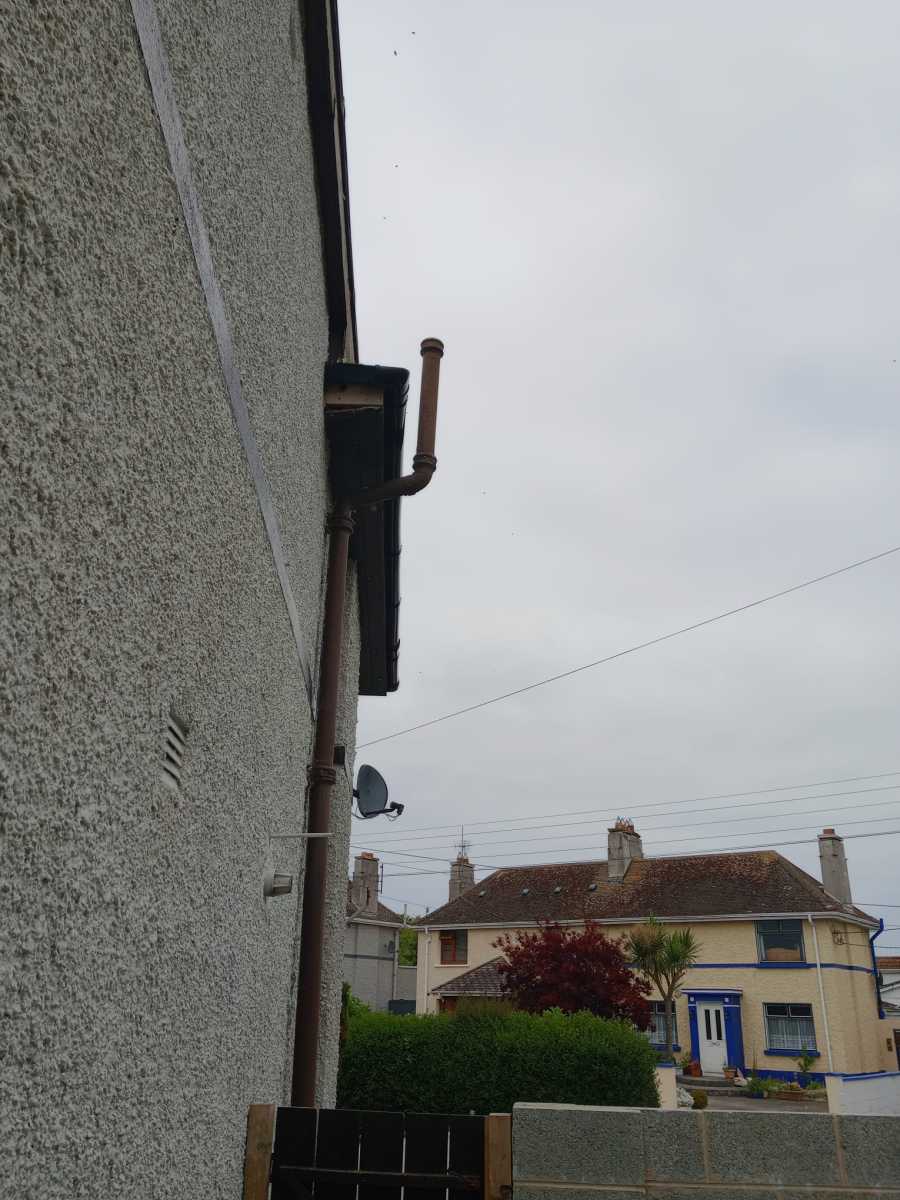
Entrance behind guttering