
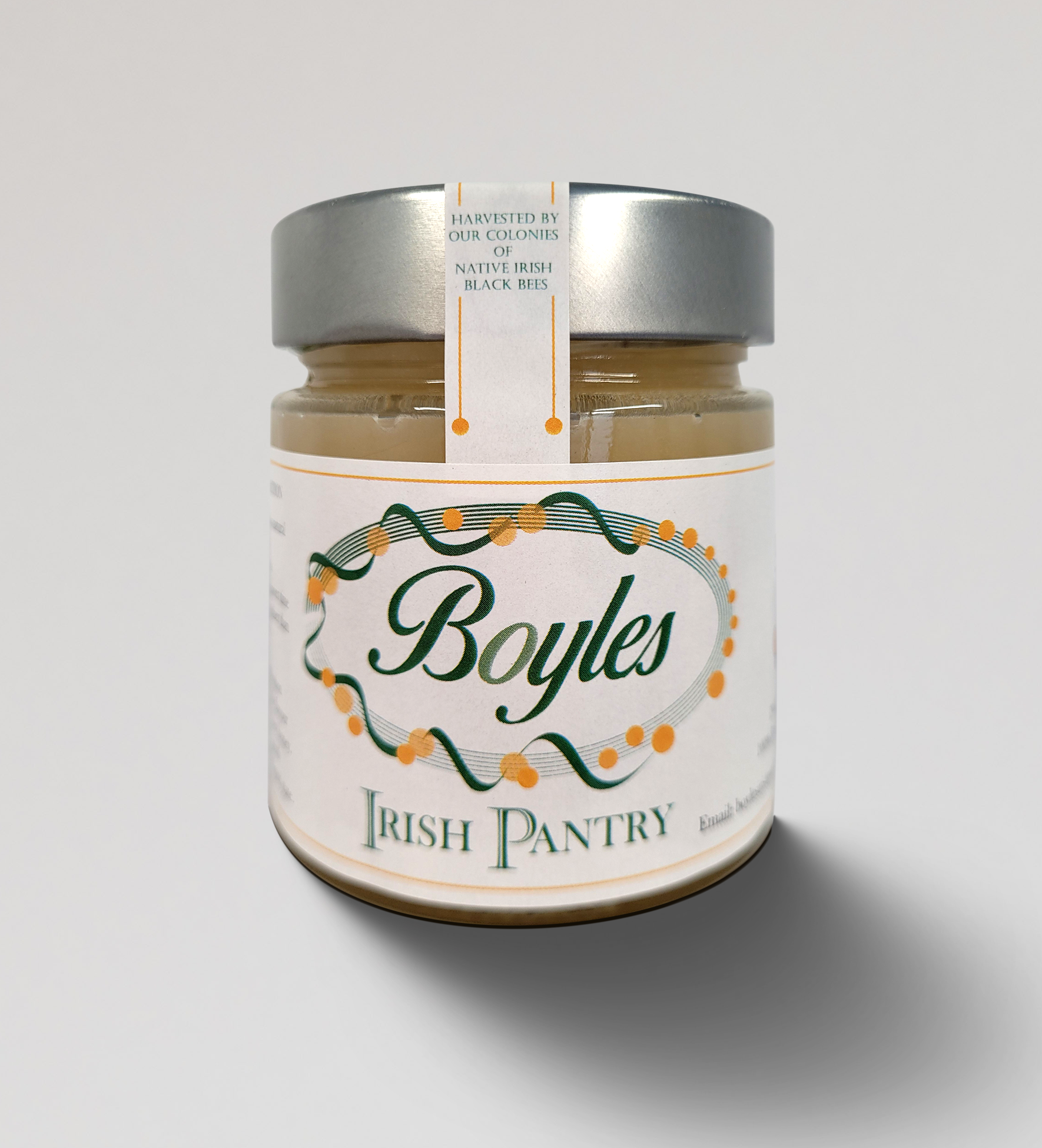
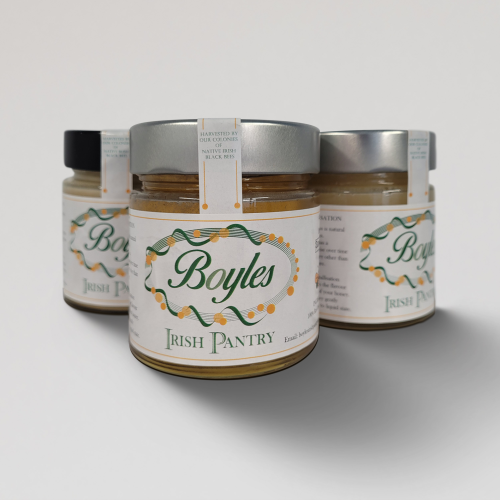
Spring Honey 300g
Our 300g Spring Honey is a testament to the resilience of spring flowers and blossoms, which endure unpredictable weather conditions and fluctuating temperatures. The nectar of these robust blooms has a tendency to crystallize rapidly in the jar, a natural process that preserves the honeys distinct flavor and quality characteristics. While some producers employ overheating methods to keep the honey in a runny state, this process compromises the honeys natural goodness and results in a bitter aftertaste. In contrast, our artisanal production process involves agitating the honey as it crystallizes, yielding small and manageable crystals that retain the honeys smooth texture and delicious taste. Enjoy the exceptional quality and flavor of our Spring Honey, produced with uncompromising standards.
What is Honey?
Honey is a sweet sticky viscous substance created by honey bees. Honey is highly prized by consumers all around the globe as a natural source of sugar unique to the area where it is created.
Why do bees make honey?
Honey bees are perfectly adapted to their environment and seasons. Creating honey during the spring, summer and autumn months is vital for a colony to survive winter. This honey is stored to be used as food when there are no flowering plants during the winter. Bees will also store pollen which will be used at the start of the next spring season to feed brood as they start to build up in colony size ready for the summer. This drive to prepare for the winter months and the endless work these colonies put into foraging result in an abundance of honey production if the surrounding lands can support it.
How is honey created?
To create honey, bees forage on nectar from plants, trees and flowers. Adult worker bees (foragers) fly out in search of abundant nectar giving sources. Nectar itself is made up of only between 20% and 40% sugars, the rest being water. This mix poses a significant problem when it comes to storing it for winter because of fermentation. If fermentation occurs in the bee’s winter food, the colony will not survive the harsh winter months. Bees have adapted an ingenious way to solve this issue. Firstly, they convert or invert complex sugars using an enzyme they produce called invertase. Secondly, they deal with the high moisture content by de-humidifying the nectar. While the enzyme is doing its work worker bees (or house bees) take drops of honey out of the storage cells one by one heating and fanning it to reduce the moisture. Once the moisture content of the solution is below 18% water, chances of fermentation are very low. This finished product is what we know as honey. Throughout this whole process from flower to honey, the bees have preserved and kept the integrity of the natural sources.
Is all honey the same ?
Honey differs from climate, season, geographics and agricultural activity. In Ireland we generally have three main nectar flows Spring, Summer and Autumn.
Spring Honeys
Important sources of nectar in spring are snowdrops, dandelions, sycamore, horse chestnut, hawthorn, oil seed rape and apples. These nectars contribute to the flavour, smell and taste of the honey produced during this time. Because of the temperature swings and unpredictable weather spring flowers and blossoms are very robust and because of this the nectar they provide has a tendency to crystallise in the jar very quickly. This crystallisation process is natural and actually preserves the flavour and quality characteristics of the honey. One widely used method to prevent this is to overheat the honey to keep it in a runny form. This in our opinion destroys all the natural goodness of the honey and gives it a distinct bitter aftertaste. So, to provide you with the best quality spring honey we actually allow our spring honey to crystalize while it is being agitated. Instead of large crystals forming and becoming difficult to get out of the jar the size of the crystals is small and it leaves you with a smooth, usable, tasty, honey.
Summer Honeys
Summer nectars consist of white clover, lime tree, blackberry, field beans, raspberries and gooseberry to name a few. With the abundance of delicate flowers and a wide variety of nectar for them to forage on, the honey that’s produced in these warm months is clear, runny and delicious. Summer honeys stay runny for longer before crystalizing and come in all different shades, colours and flavours.
Autumn Honeys
Autumn nectars in Ireland mainly consist of ling heater and ivy which are abundant at this time. These later flowering plants and their nectar are adapted to suit the cooling weather conditions. The nectar and subsequent honey hardens very quickly and requires a lot of time and effort to remove it from the comb and separated from the wax. Our unique process for this results in a set honey with a creamy layer on top, much like a good Irish stout. The flavour is strong, quite different than any other honeys we get throughout the year. Weather dependant this flow can produce a lot of honey and is unique to Ireland because of the abundance of flowering ivy present here. `

Reviews
There are no reviews yet.