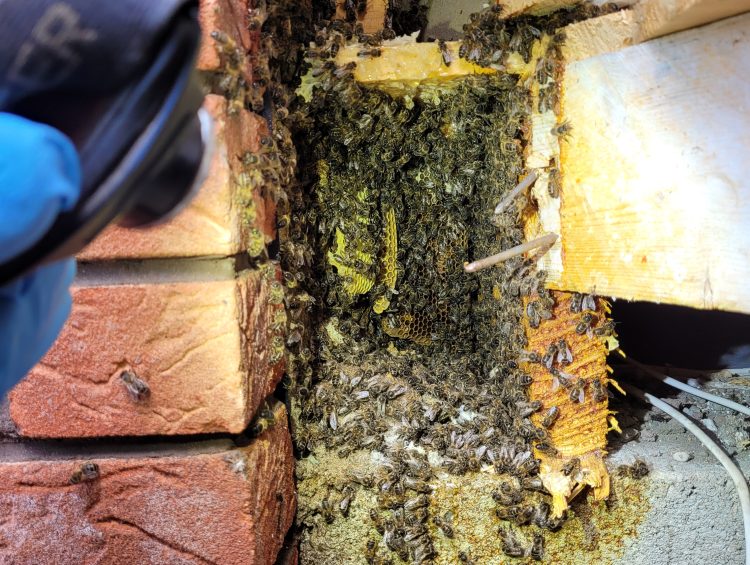
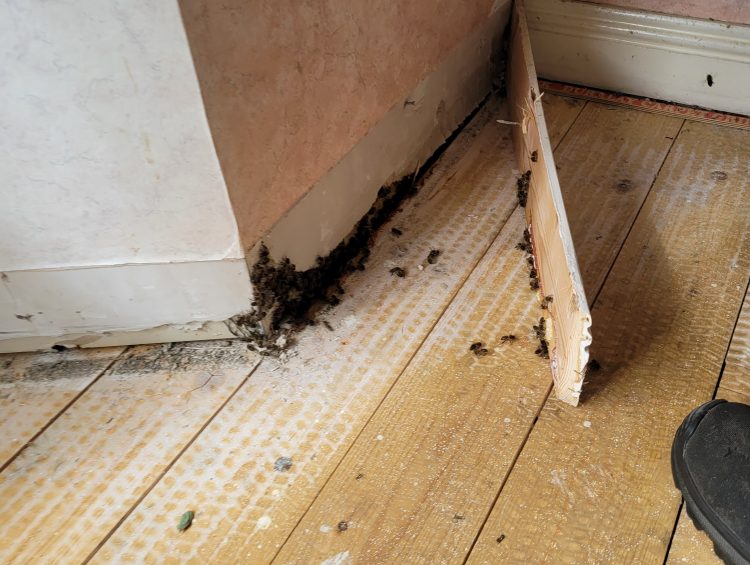
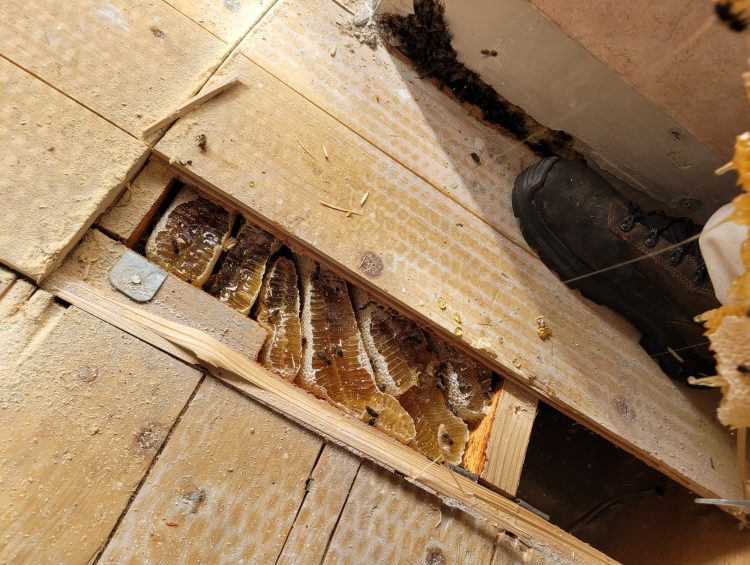
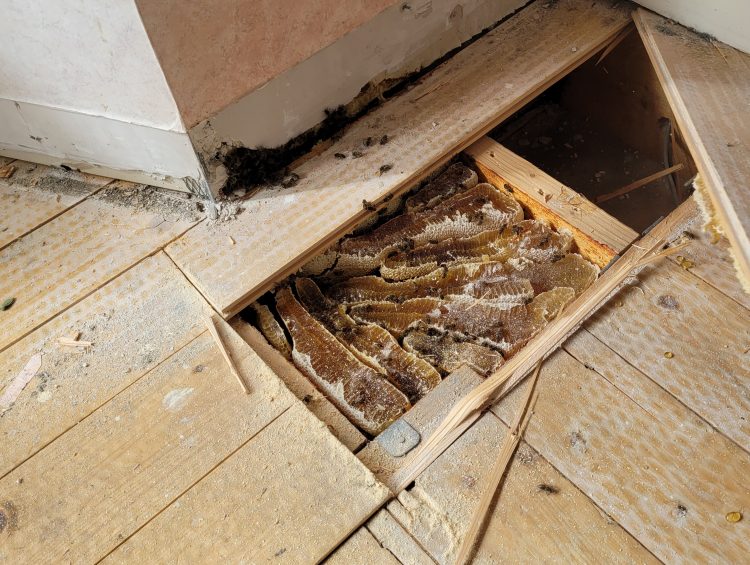
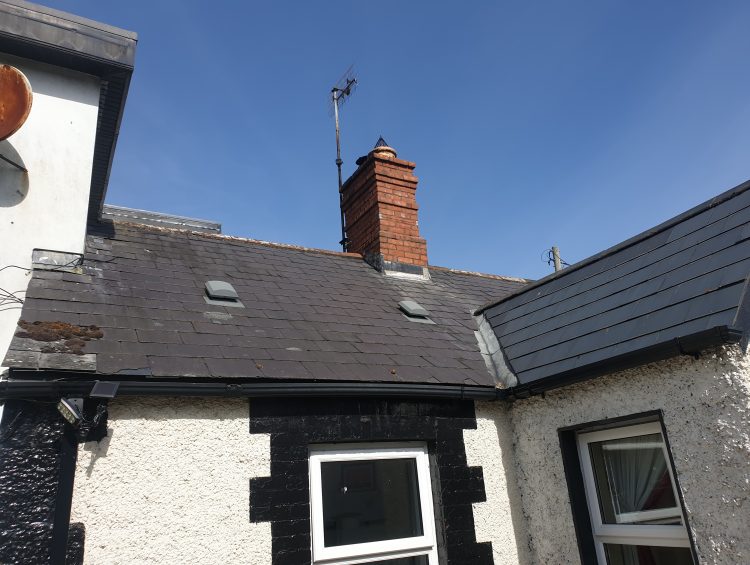
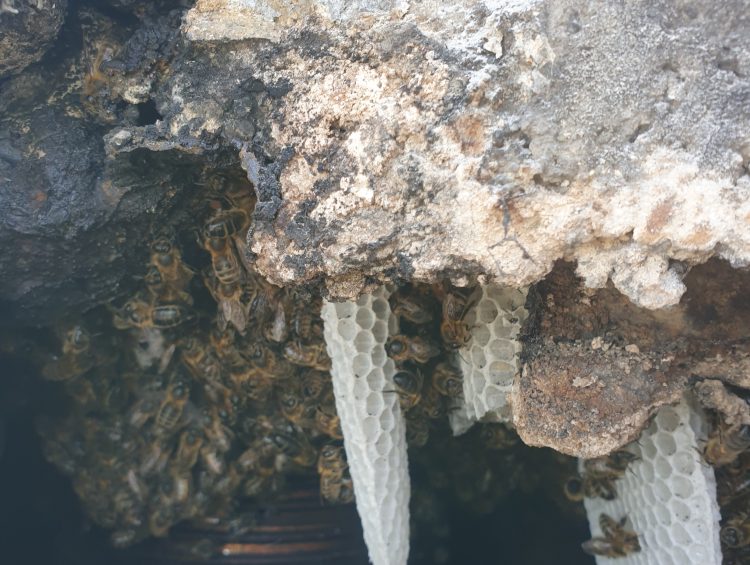
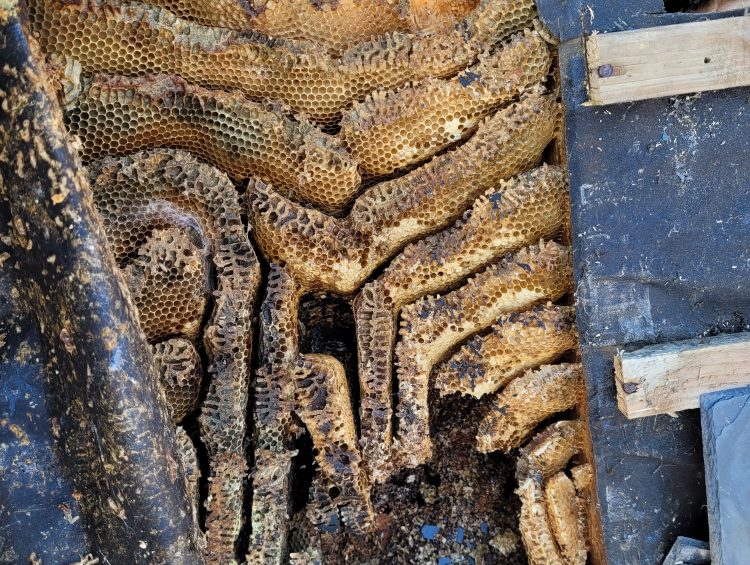
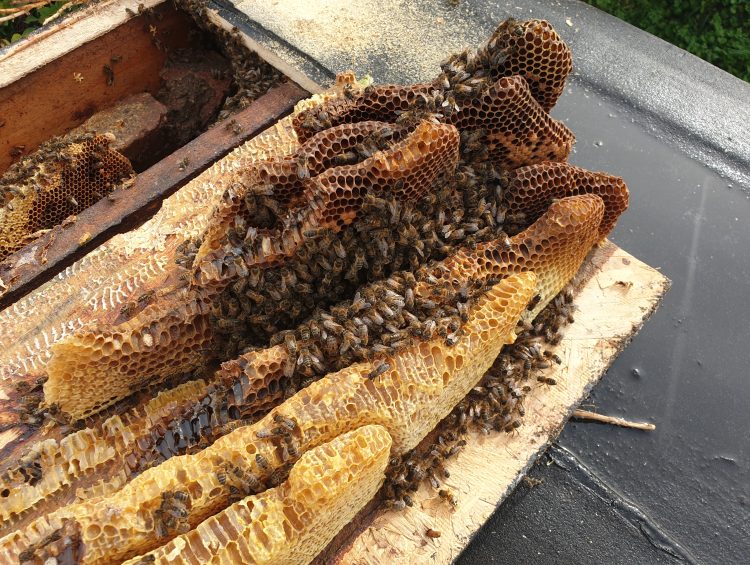
At Boyles Irish Pantry, we understand the importance of preserving and protecting bees, while also ensuring the safety and well-being of our community. We offer professional honey bee removal services for buildings and domestic dwellings. Each honey bee removal is conducted on a case-by-case basis, taking into account the unique circumstances of each situation. Our expert team will assess the site and provide a comprehensive removal plan, ensuring the safe relocation of the bees and minimizing any potential damage. We pride ourselves on our ethical and humane approach to bee removal. Contact us today to schedule a consultation and discuss pricing based on the specific needs of your removal.
Honey bee removals can be quite costly and labour intensive but there is several important issues and considerations to be understood. We need to understand about the make up of honey bee colonies, the reasons they have selected this space, issues arising, potential dangers and what we can and shouldn’t do to resolve the problem.
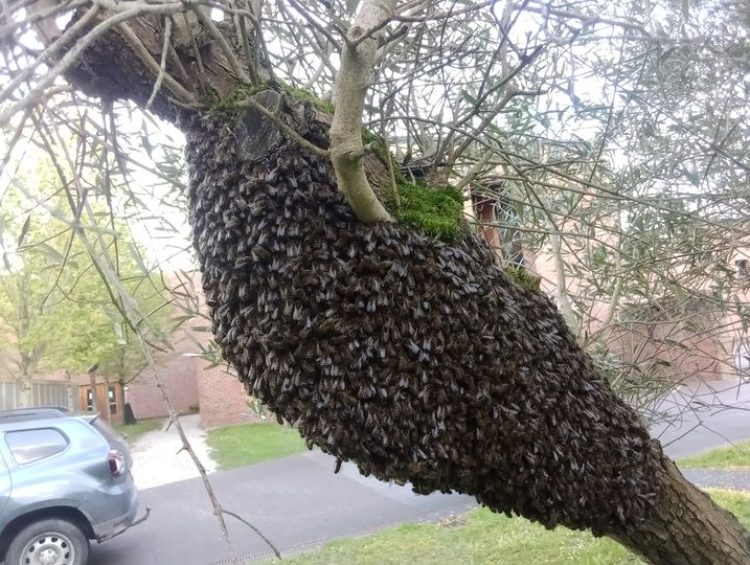
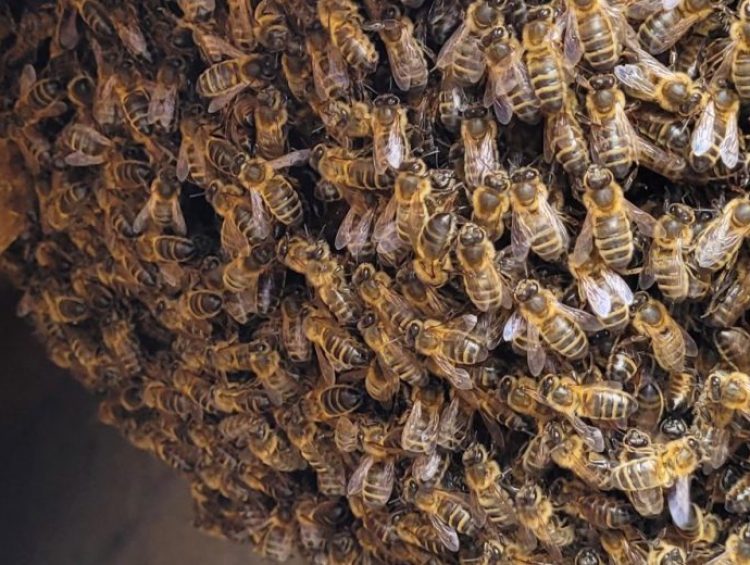
Colonies that have set up home in buildings are different than swarms. Swarms are bees on the move found hanging from a tree or bush that can be easily picked up by a beekeeper usually at no cost.
To understand why honey bees select dwellings and buildings to set up home, we need to look into the dynamics of honey bee colonies. While colony numbers can grow to between 40 and 60 thousand member it is still classed as one entity or super organism. When a colony is successful in an area, they feel the drive to reproduce and swarming is their option. Swarming begins by the queen laying up queen cell to produce new virgin queens, in some cases up to twenty. The original laying queen will then take the flying bees, roughly half the colony, loaded up with stores and will leave the hive to set up home somewhere else. This first swarm called a prime swarm can be quite intimidating to see as it looks like a tornado of bees. When the first virgin queen emerges, they may decide to split again if strong enough and produce a second swarm called a cast swarm. This may continue until the colony is just strong enough to survive and the remaining virgins will fight until there is only one queen left. This means one un-managed colony could reproduce and set up multiple new colonies each season populating the area around the original hive.
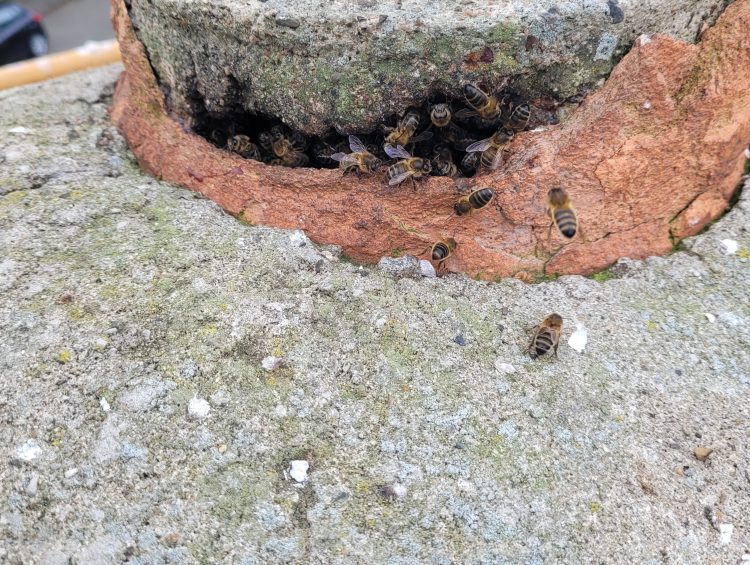
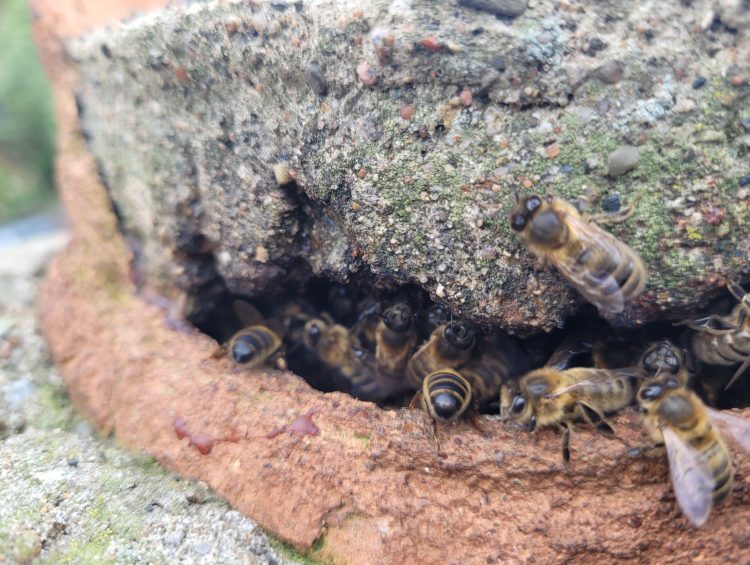
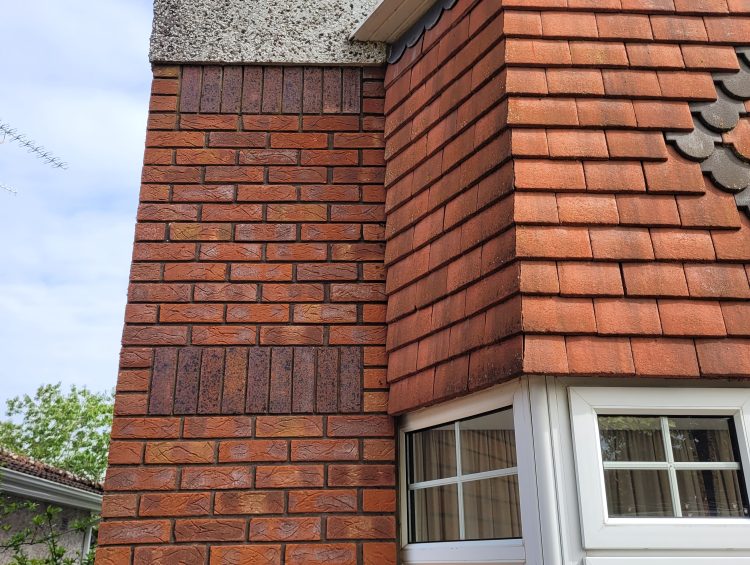
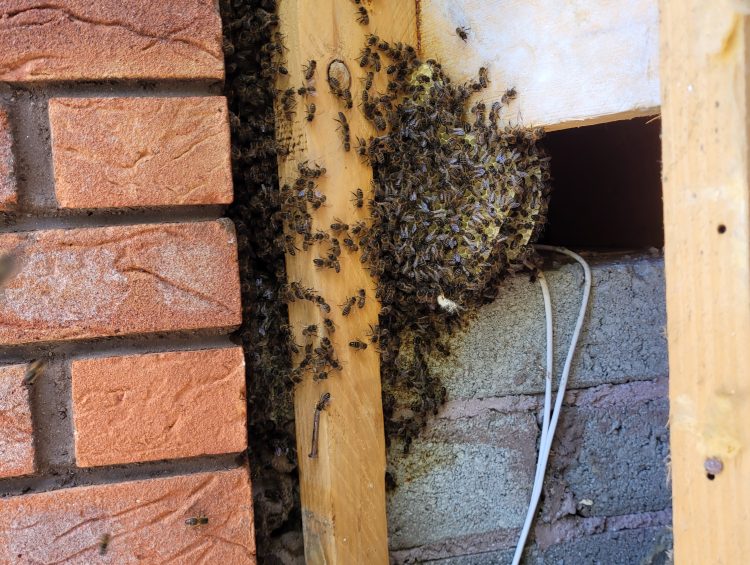
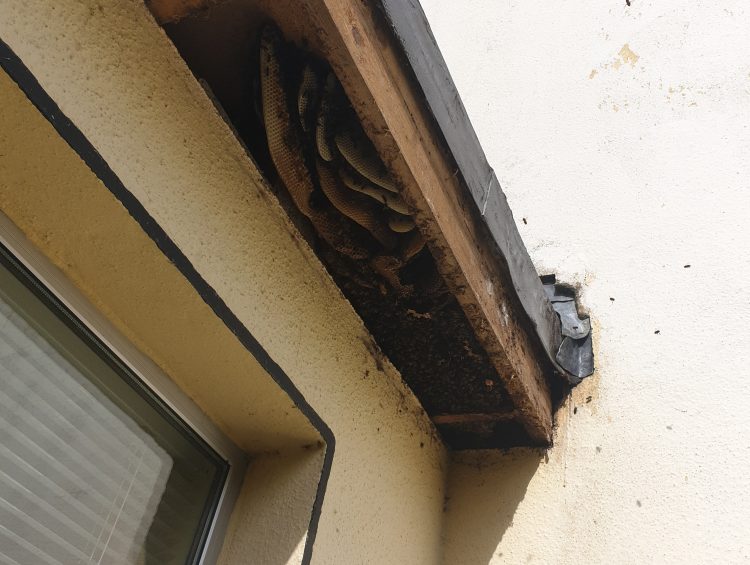
To understand why honey bees select buildings and dwellings we need to look at what their natural habitats would be. Honey bees would have naturally made their homes in tree hollows, the higher off the ground the better for protection from predatory insects, birds and mice. Due to massive reductions in these natural bee habitats and the increase in builds with much the same criteria, bees would naturally opt to set up home in these locations. Also, to note is the fact we tend not to spray harmful insecticides around populated areas the way we do on heavily farmed areas. This adds proportionately to the success rate of bees residing in dwellings and buildings that we occupy. When colonies are successful in our populated areas and decide to reproduce, they will always seek similar accommodations. This problem is seen by us regularly when a single colony is left in a property and we get called when there is multiple colonies in the same building and occupants are genuinely in danger.
It is important to highlight all the issues related to colonies residing in a building.
Honey bees do sting and even the most docile hives we manage can get very aggressive because of various reasons. There is a percentage of the population that if stung will go into anaphylactic shock and need immediate medical attention. If someone was unlucky and got stung in the eye they would lose their eye and regardless of if you are allergic or not to bee stings when a bee stings you it sends off a chemical signal to other bees to sting that place and 100 stings will kill a person.
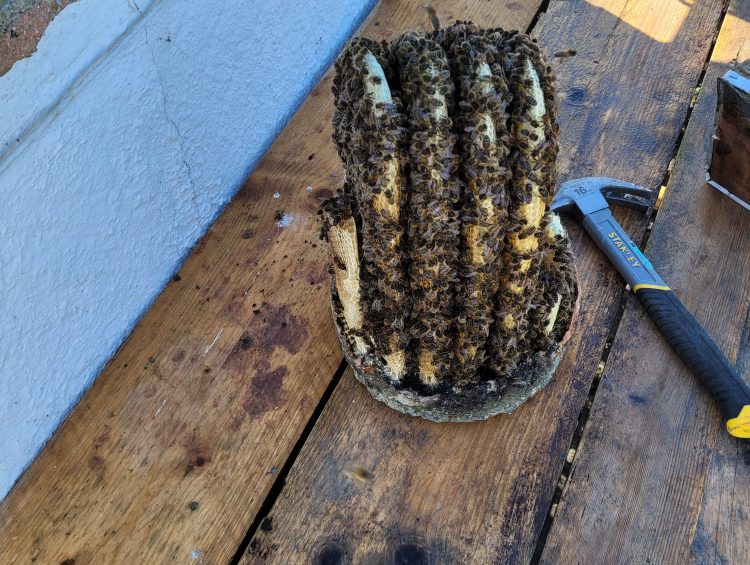
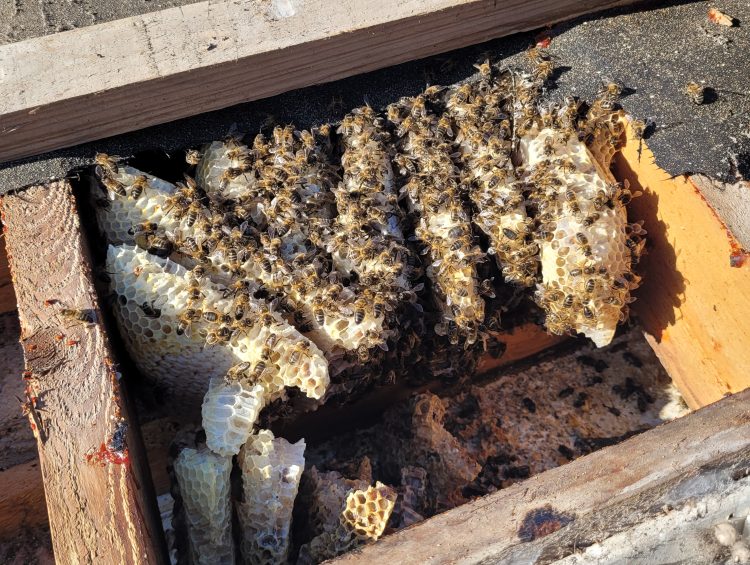
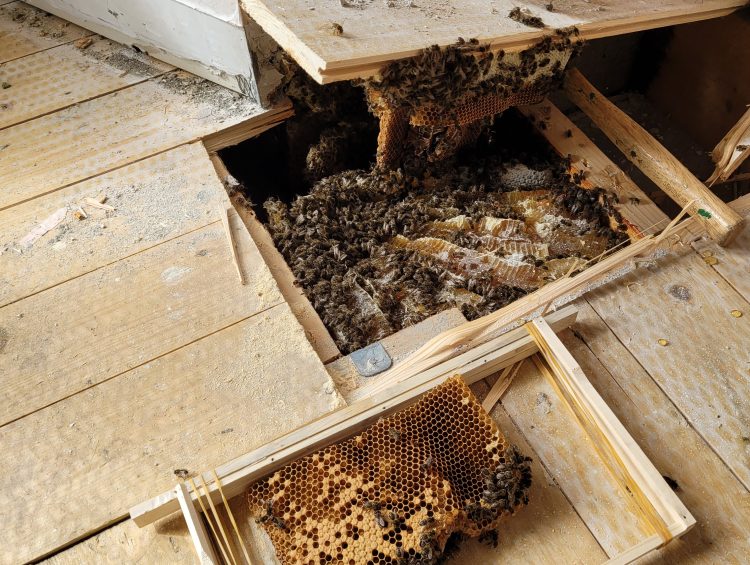
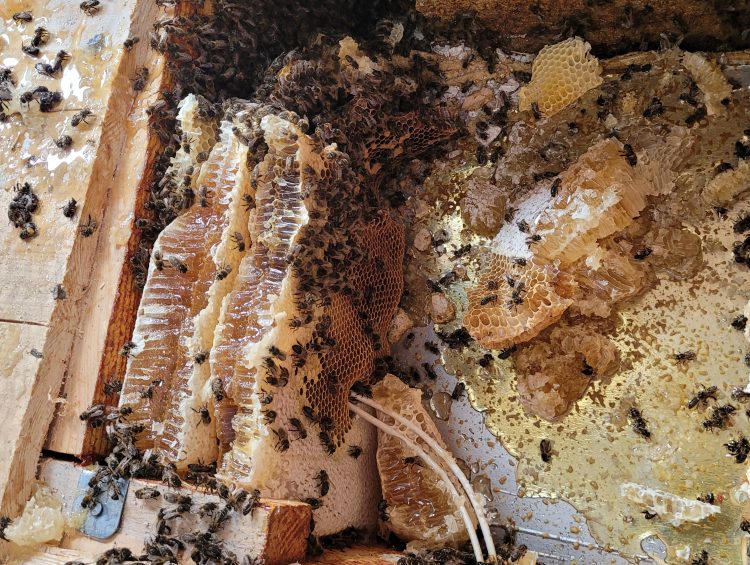
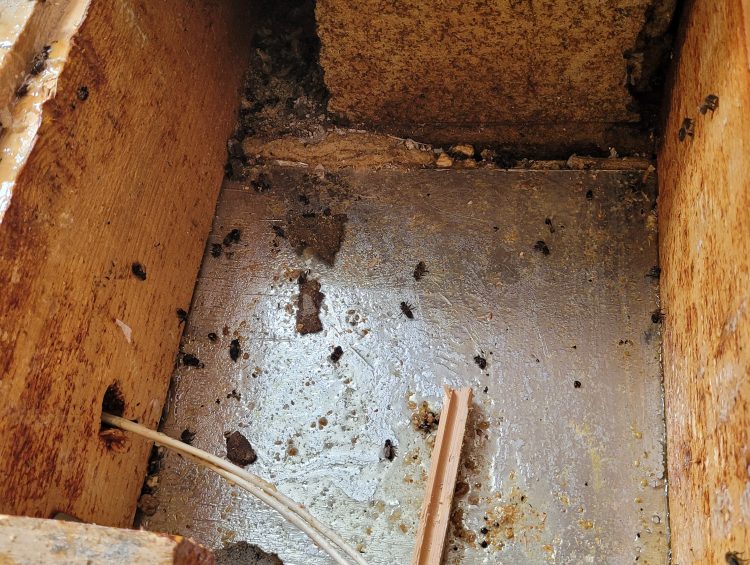
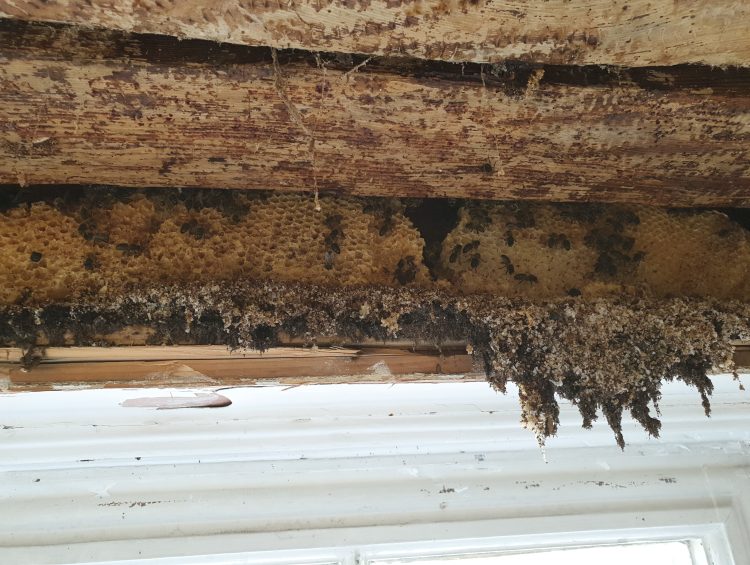
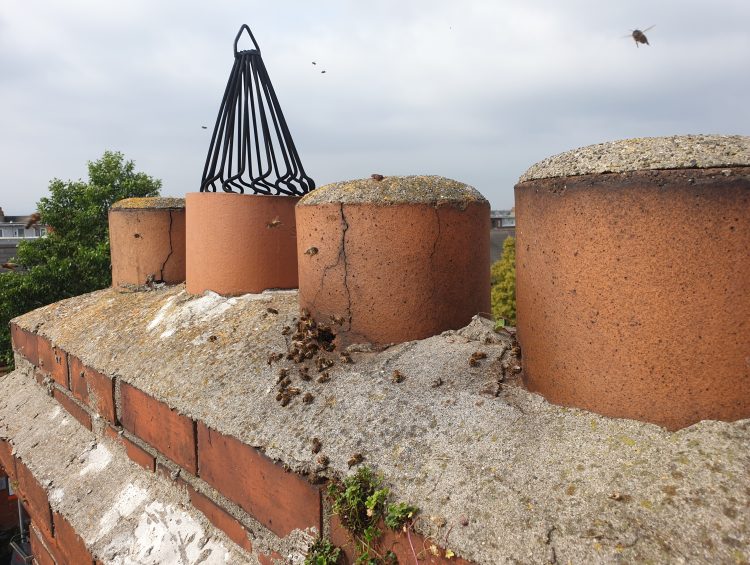
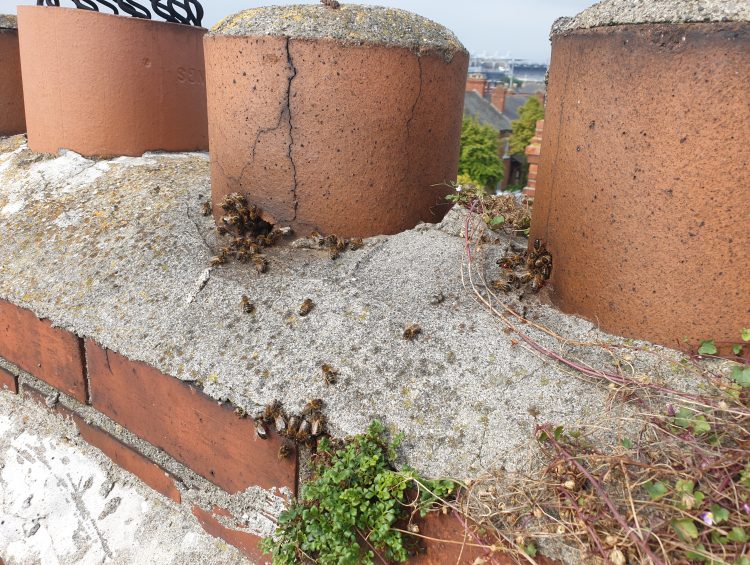
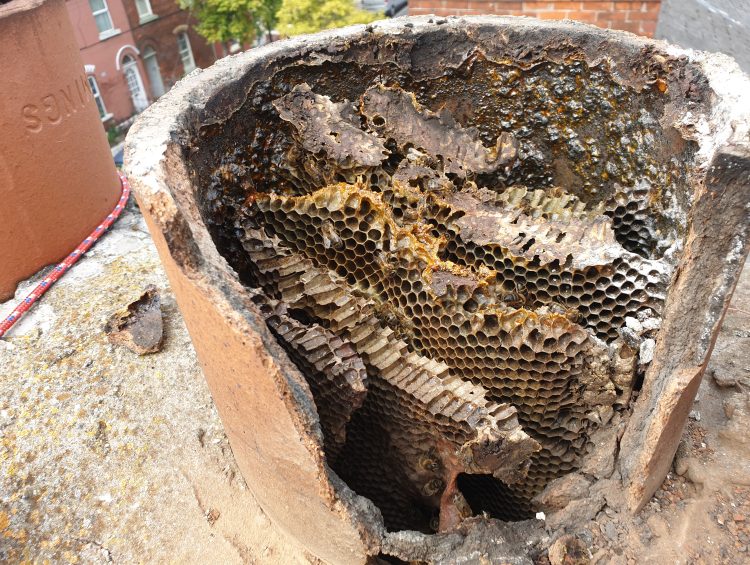
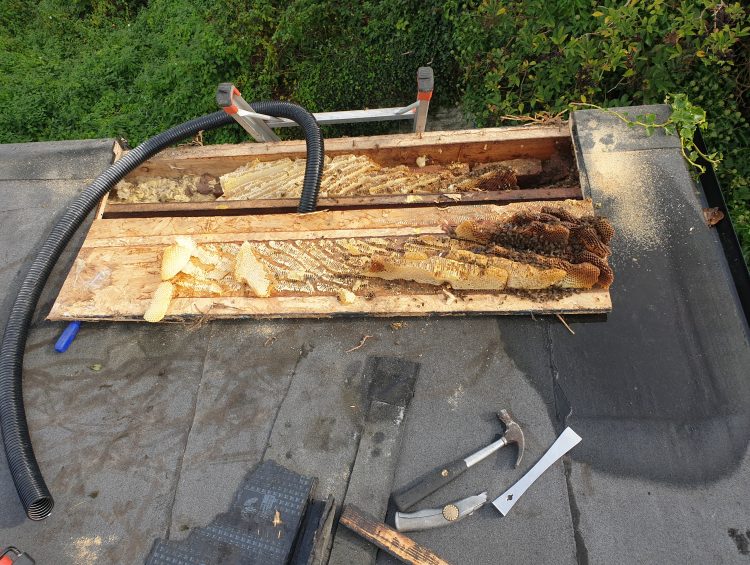
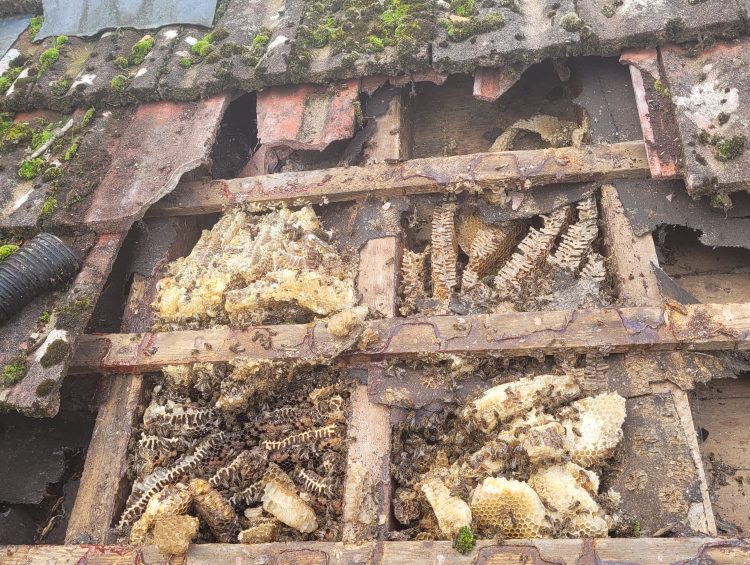
Damage to the property is also a big issue when it comes to colonies in buildings. Honey bees need a very small opening to access a property but what they build inside can be enormous. Some removals we have completed weighed in at over 500kg of comb and honey. This weight in a building or roof would cause serious structural damage. Honey bees will often remove large areas of insulation as they grow in size and debris from comb the bees drop during normal hive activity tends to mould on ceiling etc. As stated, before honey bees do attract predators like wasps which are aggressive in nature and wax moths drawn to old comb can explode in population numbers. Lastly and probably the most important issue is the comb itself, wax which we all know is flammable. Wax can be a huge fire hazard, we have seen and removed colonies that set up home in chimneys. If they went unnoticed by the occupant and a fire was lit, they could potentially have a huge candle burning in the middle of their house. One particular removal in Kells last year (2022) where a colony set up home in between floor joints was extremely hazardous because they had built around cables running to sockets. As mentioned before, mice are a pest to honey bee colonies and if a mouse chewing through that comb hit the cable it would have been a disaster.
Colonies in dwelling are ultimately un-managed and just like humans can develop disease which can then infect other colonies in the area which can be detrimental to wild bee populations and any beekeepers in the vicinity.
Let’s look at what shouldn’t be done first. Pest control companies are usually the first to be called out when a colony is discovered in a dwelling, because most people identify honey bees with yellow and black stripes. Our native Irish honey bees often get mistaken for wasps. Pest control companies are able to deal with wasps very efficiently using a nerve agent powder. This procedure should never be used on a honey bee colony. Wasps do not build comb or store honey so a nerve agent with kill the members of the nest and all that is left is a paper like structure which is of no interest to other bees and pollinators. Honey bees on the other hand have comb, honey, pollen and propolis which would attract any and every type of insect/pollinator to rob the unoccupied colony out. This action would result in the decimation of the bee and pollinator populations for miles around and most if not all pest control companies will refuse to perform this action because the nerve agent will stay active for a very long time. Also, which we have seen in places is a beekeeper removing the bees and leaving the comb in place, so essentially leaving a free, ready built home for another swarm to move into which is very counterproductive.
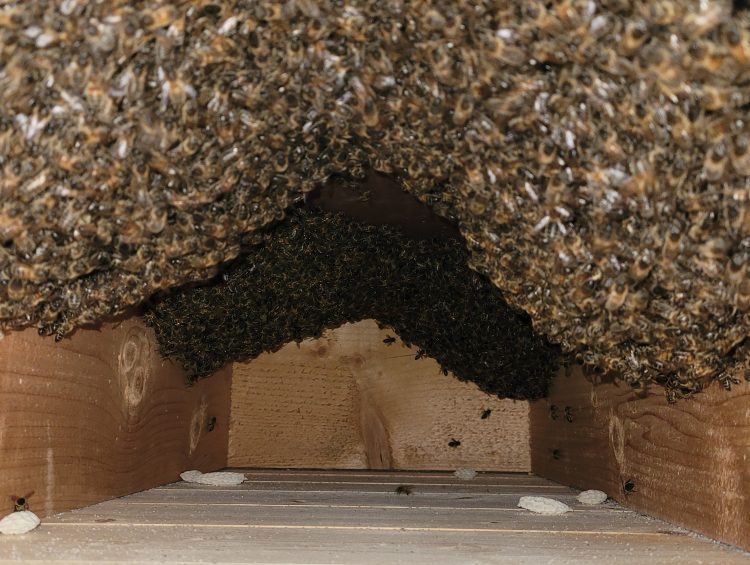
To perform a proper removal, it is necessary to gain full access to the colony and hive. This can and often does involve removing parts of roofs, walls and structural materials. Honey bees tend to set up hives in very high, inaccessible places. Accessing them often requires scaffolds to be built, MEWP’s to be hired or companies to be brought in to deconstruct parts of a building. Once access is gained the colony must be assessed for diseases, samples taken to be tested if needed and then the removal can begin. If the colony has a suspect disease everything including the bees must be destroyed and if the colony is disease free the colony can be removed for re-homing. The removal process can be very stressful on the bees but we have developed methods and equipment to give them the best chance of thriving in their new location. Once all bee related materials have been removed rebuilding or renewing by an appropriate construction professional must also be done.