
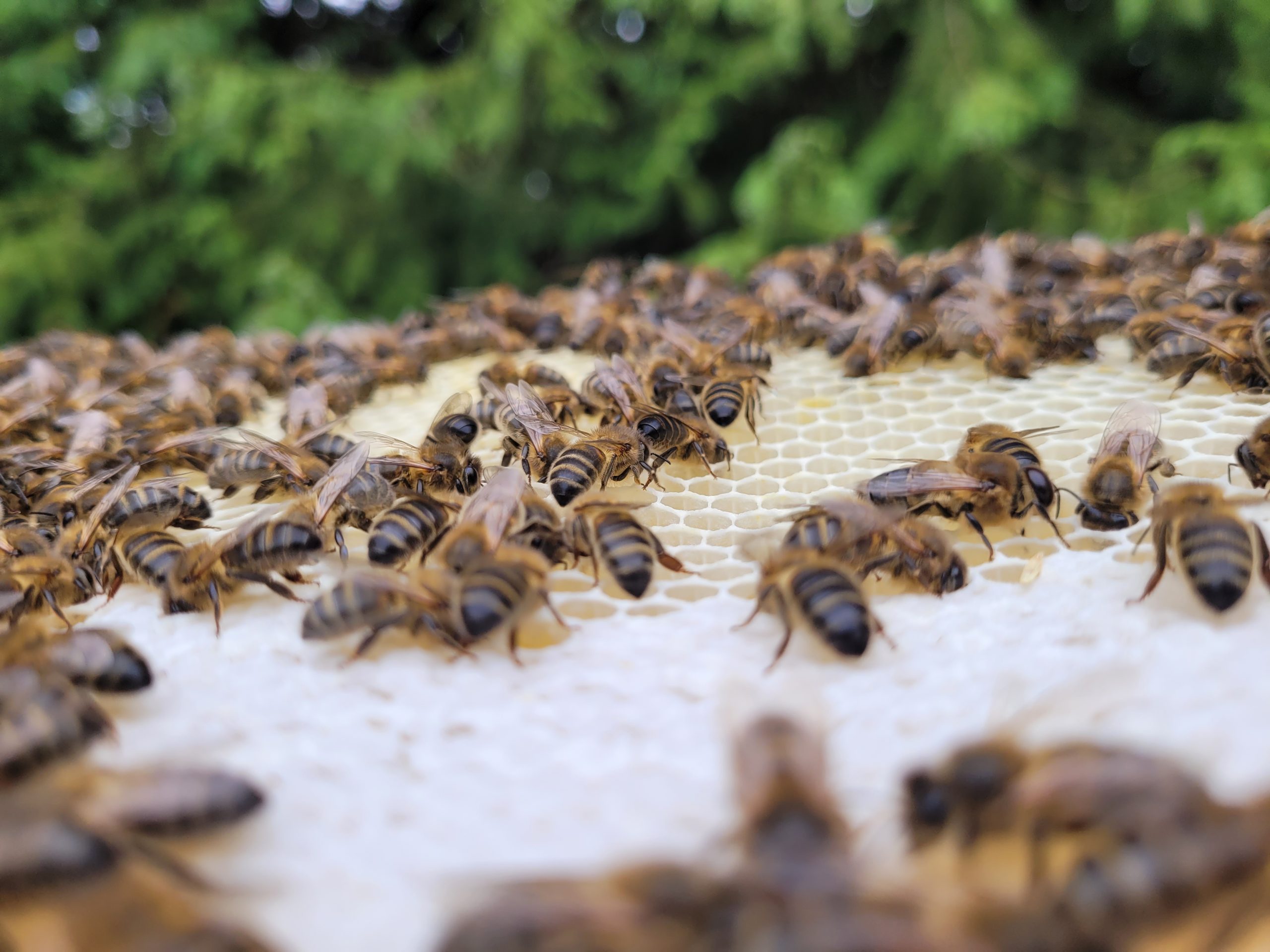
Honey bees are some of the most important creatures on our planet. They play a critical role in pollinating crops and plants, which in turn helps produce the food we eat. But did you know that these buzzing insects are also incredibly fascinating? Here are some interesting facts about honey bees that you probably didn’t know.
Yes, you read that right! Honey bees are intelligent creatures with a highly developed sense of sight. They can actually recognize human faces and will remember them for up to two days. This ability allows them to distinguish between a face that provides them with sugar water and one that doesn’t. In nature it helps them identify predators and other potential threats to their hive.
Honey bees are incredibly hard working insects. With a max speed of 25 kilometres per hour and wings beating about 200 times a second, they are nothing less than ultimate flying machines. They can fly the distance of up to 10 km in search of food but if possible prefer to stay within a three kilometre radius. In one day, a single bee can visit up to 2,000 flowers!
Honey bees have an amazing way of communicating with each other. When a bee finds a good source of nectar or pollen, it will return to the hive and perform a dance known as the waggle dance. By moving in a figure-eight pattern and waggling its abdomen, the bee communicates the direction and distance of the food source to the other bees in the hive.
Forager bees use the round dance when the food source is close to the hive, at most 50 metres away. The bee will turn in circles alternating from left and to right. The more abundant the food source, the longer and more energetic the dance. Unlike the waggle dance, the round dance does not communicate any specific direction.
Honey bees have two large compound eyes, responsible for picking up colours and shapes, as well as three smaller ocelli eyes on the top of their head which they use for orientation and navigation.
It takes a lot of work for a honey bee to produce honey. During summer the average lifespan of a worker honey bee is six weeks. It takes twelve bees to produce a teaspoon of honey. To produce one kilogram of honey 1,100 bees have to visit 4 million flowers!!
As honey bees sleep their antennae, thorax and abdomen drop downward as they relax and stop moving. Just like humans their body temperature drops and scientists have discovered distinct brain patterns in sleeping bees. At times bees get so tired they go to sleep by falling over sideways exhausted from their busy day. Sometimes bees hold each other’s legs as they sleep, that’s really cute!
Honey bees are some of the oldest insects on our planet. Fossil evidence shows that they have been around for millions of years! Although the evidence is hard to come by, scientists presume bees first appeared on earth around the same time as flowering plants, about 145 to 66 million years ago. It is thought that bees evolved from ancient wasps that lived 120 million years ago. These wasps built and protected their nests, just like bees defend their hives today. The difference however is that the wasps were predators and carnivores. Unlike bees who feed on flowers and plants these wasps fed on other insects.
The average weight of a worker bee is 0.1 grams.
A queen bee can lay around 800 000 eggs during her lifetime.
A drone has no father but does have a grandfather.
If a worker bee stings it loses its stinger and dies.
Bees are very neat and tidy, they groom one another and keep their hive nice and clean.
Honey was found in King Tut’s tomb along with other valuable items the ancient Egyptians cherished the most. It is still edible 3000 years on.
Honey bees are truly amazing creatures. They are intelligent, hardworking, and essential to our ecosystem. By learning more about these fascinating insects, we can better appreciate the important role they play in our world.