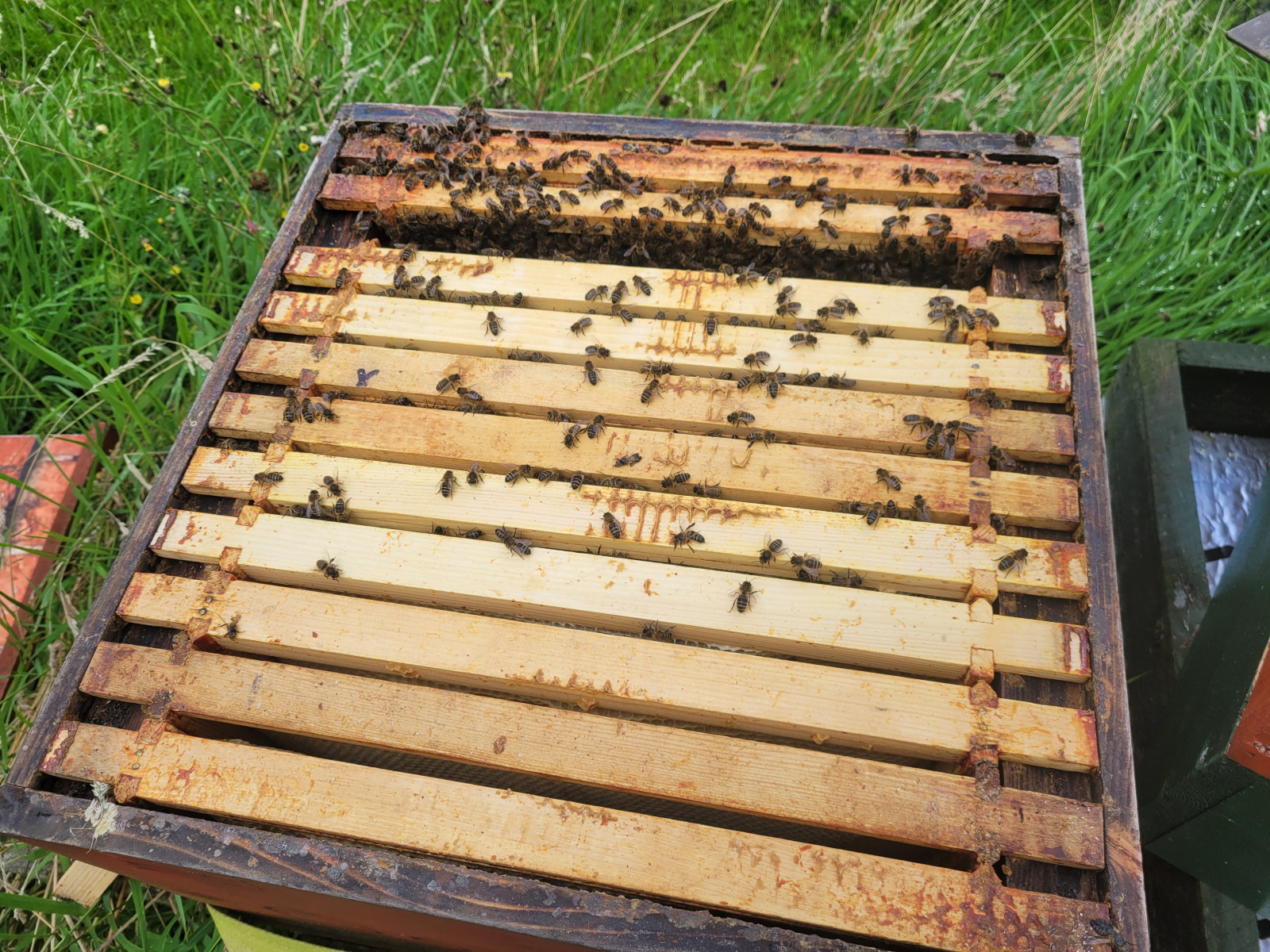
Viewing a post on http://swarms.ie on the 3rd July 2023 a College in Navan had contacted them about a honey bee removal. We were given the contact details and touched base with Jenny at the College.
Stephen from swarms.ie had advised them on the removal, access and what was needed to be provided by them for the removal to take place.
The colony was located high on a south east facing external wall. They had gained access to the cavity through a broken seal on the brick façade and had been noticed in May. The wall was in an enclosed court yard garden area and with exams going on they had to close it off and keep all the windows opening into it closed. It was decided we would wait for a quieter time in the College to do the removal. Jenny organised scaffolding to be erected and we performed the removal on the 21st of July.
When we arrived the first job we needed to do was gauge the size of the colony and the space they occupied. Using a thermal imaging camera, I was able to track the heat signature and mark the wall with chalk. Knowing exactly where they were was vital to causing the lease amount of damage and repair work needed afterwards.
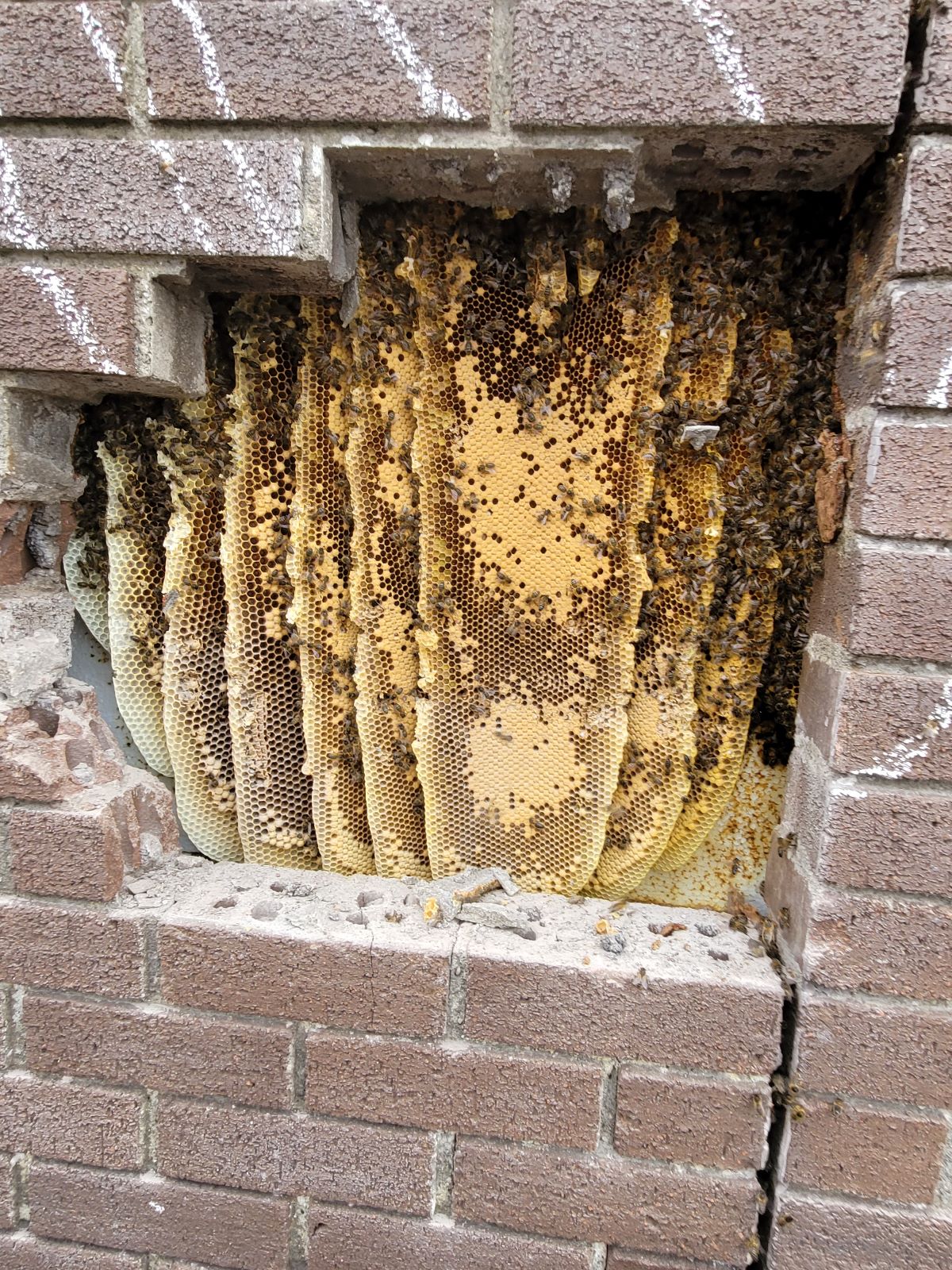
With the wall marked we got set up. Knocking out the first brick is always the hardest. Trying not to aggravate the bees too much we use a combination of a small masonry bit and old-fashioned brut force with a hammer and chisel. Starting from lowest marked heat source we found the bottom of the comb. Working left and right we exposed the sides. Carefully removing the brick above until we exposed the whole brood section.
You can see by the pictures and video the beautifully built comb that takes advantage of every bit of space and provides good ventilation for them to raise young. Before going further up into the higher comb where they would have honey stores, we started the removal. To avoid cause a huge sticky mess leaving the honey stores till the end is the best thing to do. Section by section we cut away the brood comb, gently removing the bees as we went. After removing all the brood and bees we could we moved on to the higher combs. We removed the bricks right up to the concrete plinth above exposing the rest of the colony.
Removing the honey had to be done quickly and straight into buckets. After that messy work was done, we needed to remove the cavity insulation too. The bees had coved it in propolis and actually carved cells which they had started storing pollen in. With almost all the bees in our box and all traces of them removed the job was complete.
As a temporary fix we screwed a board over the whole to keep any driving rain out of the cavity. This being a substantial colony there was still quite a few bees flying around which would dissipate in a week or two so the repair work could be done.
The colony is now re-homed in an apiary near Lobinstown, Co Meath. During the removal there was no sign of any disease’s and they showed no hybridisation. The queen was present when we inspected them for the first time and has been clipped and mark red. The colony is building well and we are confident they will be strong enough to survive through the winter.
Big thanks to the efforts of all involved for putting the conservation of this colony of essential pollinators above all else.
If you want to learn more about conservation please visit our page Bee Conservation