
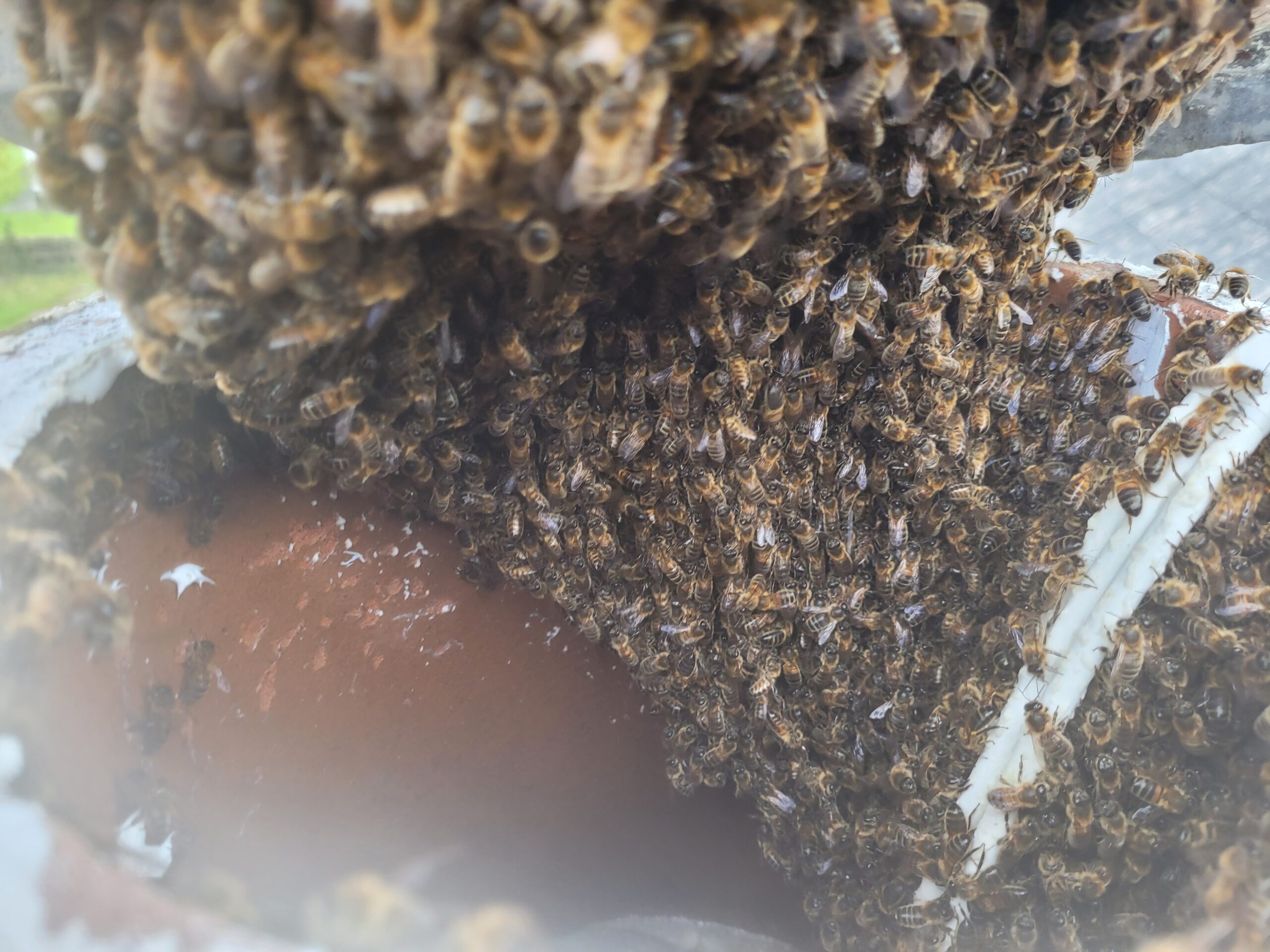
On May 12th 2023 we got a call from a nice lady in Baltray, Co Louth. She explained that a swarm of bees had decided to set up home in a chimney in the neighbouring cottage the evening before. Bees were coming into the house through this chimney and collecting on windows within the house. They had contacted serval organisations to have them relocated and were told their only option was to have them destroyed. These lovely people, concerned with conservation and protection of wild life, refused to go down that road and kept contacting people until our number was passed on. Baltray, Co Louth is only a few mins drive from us so I was able to have a look that evening.
The swarm which by this stage had become a colony was in an unused, capped off chimney flue. Visually I could determine that the removal wasn’t going to be too much trouble and repairs would be minimal so I organised it for early the next morning. The cottage itself is overlooking the picturesque Baltray estuary and is simply beautiful. I could see why the bees picked that spot.
The following morning, I arrived and started to set up, with help from the owners who were very enthusiastic about saving the lives of these vital pollinators. Removing the bee colony went without any hiccups. I was able to slowly remove the capping while gently spritzing with water to make the bees believe it was raining. I then used my bee vac to trap the bees into a pre-built box with 6 frames of foundation ready for them to start building. Once I had all the bees I could possibly collect, I sealed the entrance and opened the vents for them to get air. At this point I could show the home owners the colony and the activity already happening in their new home. The only repair needed was to replace the capping but I left it off the chimney to let the returning foragers know the colony was gone in order for them to return to their original hive.
After the removal, over a cup of coffee and biscuit’s we talked about what was going to happen with the bees and where they would be going so I have included the pictures from the removal in this blog, updating you and the owners on the progress of these bees. The colony was placed in an Apiary in Slane, Co Meath.
It has been monitored and inspected on a weekly basis. We determined after the first inspection that although it wasn’t a huge number of bees it was still a prime swarm with a fully mated queen. The most recent pics show they had become a very strong 6 frame colony and we have moved them to a full, standard 12 frame hive. The colony has needed no intervention for us regarding feeding or treatment and we wish for the best for them going forward.
We want to give a huge thanks to the responsible home owners that went out of their way, and against initial advice, to protect these bees. Destroying this colony with the nerve agent, which pest control companies are only supposed to use on wasp nests, would have devastated the population of most pollinators in a 1.5mile radius. Mapping this radius would have given way to the possibility of one of our own apiaries also being destroyed.
To learn more about removal work we do please visit out services page below
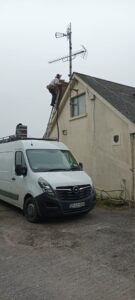
Pictures provided by the owners

Pictures provided by the owners
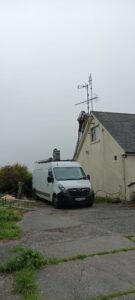
Pictures provided by the owners
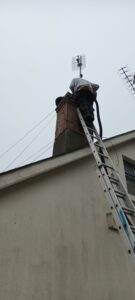
Pictures provided by the owners
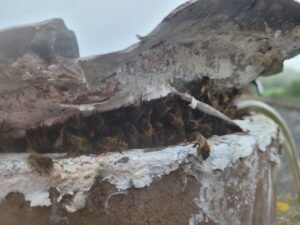
Starting to lift the cap
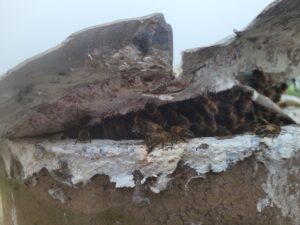
With a spritz of water they are staying together
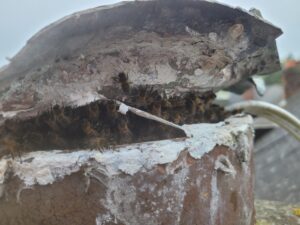
Gently breaking the seal
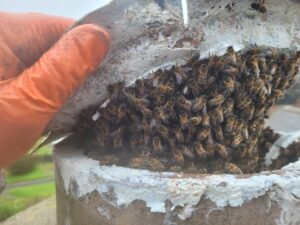
Cap is nearly free
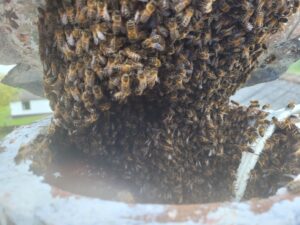
easing the cluster up to find the bottom
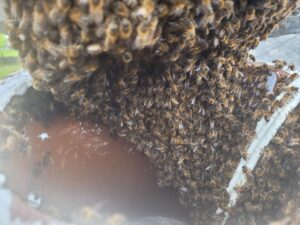
With letting any bees fall back down the chimney start removing them
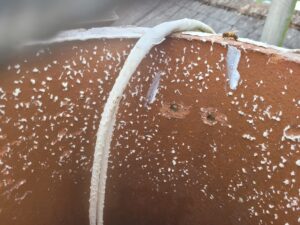
Two holes pictured here were the access point
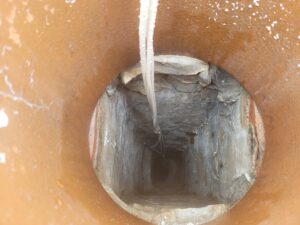
Cleared and bee free
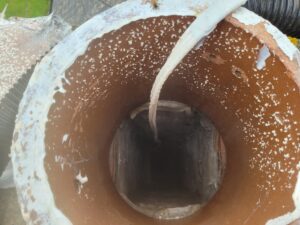
Small specks of wax where the colony had started building comb
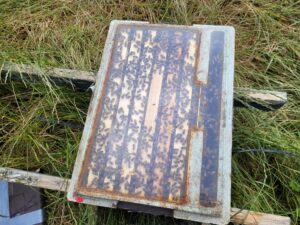
Very strong 6 frame colony now
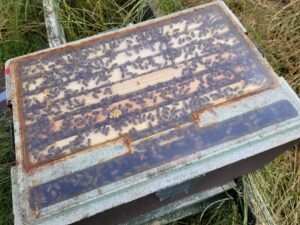
Strong enough to start building in feeder
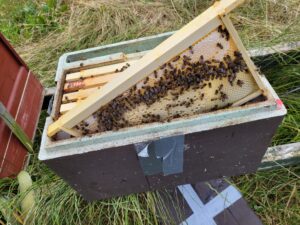
Quick look at frames as I transfer them
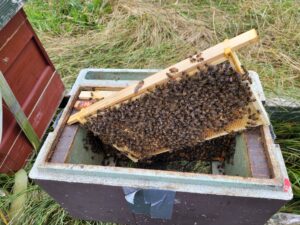
Plenty of brood