
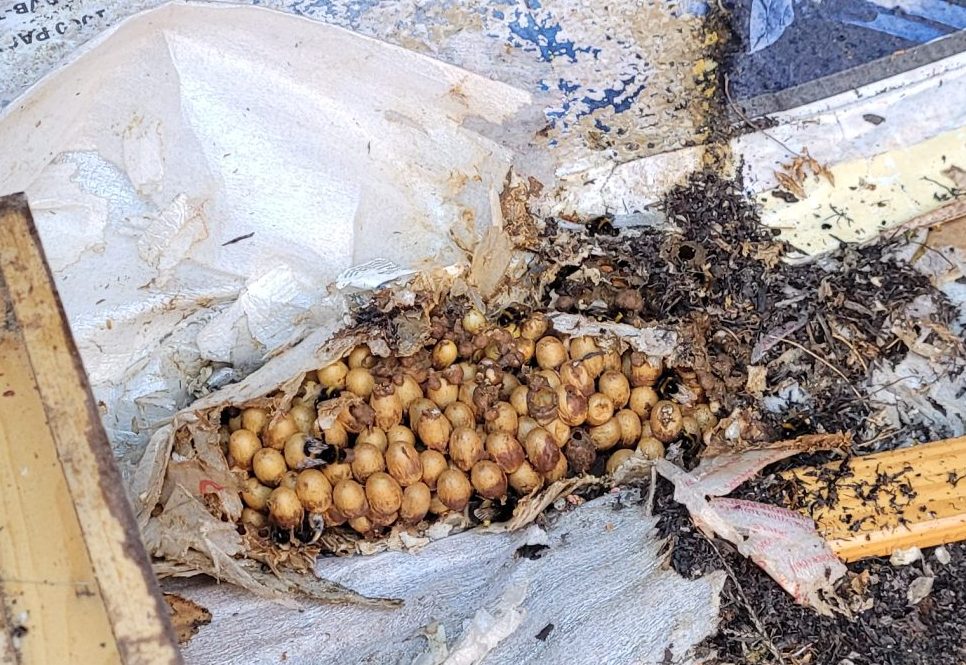
Firstly, removing bumblebees is not something we would typically do but in this instance the nest would have been destroyed and it goes against what we stand for at Boyles Irish Pantry. Bumblebee removal is not something I would advise anyone to try doing without some degree of knowledge or experience. Our advice would be, if possible, to leave them alone allowing them to live out their seasonal cycle. Away from the immediate surrounds of their nest, bumblebees are very docile and non-aggressive but they will guard their nest ferociously.
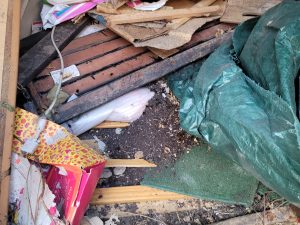
We were contacted by Pat Casey, Housing Supervisor in the Louth County Council. Pat outlined a problem with bees in a house in Dundalk. After a few pictures and messages sent back and forth we identified them as bumblebees. They were located in a shed under some junk left by previous tenants. The shed itself was going to be demolished and the nest had to be removed to accomplish this. With preservation and conservation in mind removing the whole colony and relocating it was agreed.
Bombas jonellus nests resemble a pile of yellow/brown marbles piled together with open cups around the outside to store pollen and nectar. Bumblebees don’t build masses of storage comb like honey bees and basically use what they forage day by day. This is why often if you find a struggling bumble bee, sugar water can get them back moving and able to fly off. Bumble bees are said to be only 15mins from starving at any given moment when they are outside of the nest.
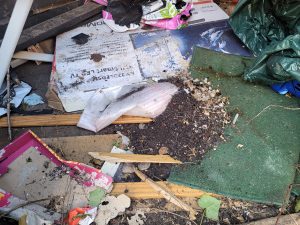
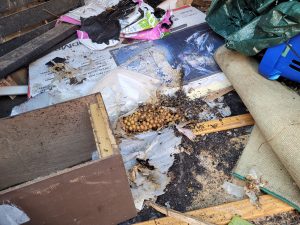
To start the removal, I had a premade box with a closable hatch on the front. I had filled a small bottle with sugar syrup and put a wick through a hole in the cap to give them food while transporting them. I also had a water sprayer filled and ready beside me before starting. Carefully I removed debris until I got to the nest located inside packaging from a flat screen TV. I opened the packaging to get a good look at the size and where it finished. Slowly I cut away the rest of the packaging from the nest. Luckily enough, they had built more or less on the shed floor and the bottom of the nest was flat. Once free I slid a flat board under the nest stopping every time they got agitated. When I was sure the nest would lift without breaking, I carefully lifted it into the box with the pre-made food source. The open cups of nectar and pollen where not broken or damaged by the move. I loosely covered it with some of the packaging and opened the door. Positioning the box entrance close to where the original nest entrance would have been it wasn’t long before they were flying in with pollen. To keep as many as I could from going back out to forage, I sprayed water into the air around the box to mimic rain and when the majority of the bees were in the box I closed it up and took it away.
We have identified the species of these bumblebees as Bombas jonellus. They have a white tail, two distinct yellow bands on the thorax and the short face, rather than the longer face of the Bombus hortorum. This species is widely distributed and common across Ireland. Active from as early as February through to October. They can be found in a wide array of habitats including parks and gardens.
The nests which at most can contain 50 to 120 workers, can be situated either above or below ground. A small hollow in the ground left by an animal or dead plant is an ideal spot to find them nesting underground. Under sheds, in tall grass and piles of debris are common places for them to nest in above ground.
Within an hour I had relocated the nest to Meade Farm Group head office where we have a main honey bee apiary and left them to settle in to their new home. We will keep regular updates and pictures on their development here.
Special thanks to Pat Casey and the Louth County Council for their continued effects in preservation and conservation and to Meade Farm Group for adopting this colony.